Pages

Monday, May 30, 2011

Unit 19 Task 4B


Task one consisted in an infographic, researching about, pixels, raster and vector images, bit depth, colour space, image capture and optimising all of which had to be included in the infographic and in creating our media blog. One of the main difficulties that I encountered in this task was when it can to designing the infographic. Since there were quite some keywords to be included, I felt that it was going to be crowded with information.


We also had to create banners and backgrounds. I’ve made a couple of banners varying from jpegs to gifs. They were the most fun part of this task, as I love to experiment and create with Photoshop.

Moving on to task two, researching on our client: MediaCast. MediaCast is made up of students who study Media within the Institute of Art & Design which started in the scholastic year of 2009/2010. The aim of the brief was to learn the basic tools and techniques of digital graphic software to produce images for interactive media products.

A plan of the blog was then made; the MediaCast logo in the banner, colour scheme would be blacks/whites/greys/; white background with black text and a grey border, sticking with the tradition, the font would be either Times or Arial.

Later on, for task three we had to design three different banners together with their colour schemes. Designing the banners was a fun process because I got to experiment even more with Photoshop, and, just like I did with the banners for my blog, I’ve done jpegs as well as gifs for this one. Took a set of photos and initially started working on the posters.


In the end I've found myself mostly doing what I already knew with Photoshop.

Wednesday, May 11, 2011

Posters

These are the three posters I've made for the MediaCAST blog:


---
I've made these two before the ones above:


Wednesday, April 27, 2011

MediaCAST Banners

For Unit 19, we're required to do three different banners for the mediacast blog. These are my three different banners & Colour schemes:


1. Would be for the background
2, 3 and 5. would be in the banner
4. Would be for the text


1. Would be for the text
2 or 4. Would be for the background
All of the colors would be in the banner


1. Would be for the background
2. Would be for the border
3. Would be for the text

Monday, April 25, 2011

Filming

Filming was scheduled for today: 25th April.

The weather wasn't fully on our side as it was cloudy & windy but luckily it didn't rain!

All the talents and crew were there on time and everyone has worked together.

During the filming, some shots had to be changed from the storyboard.

[To be updated]

Saturday, April 16, 2011

Cancelled

Filming got cancelled because of the rainy weather. When it came to booking the equipment, we didn't really take bad weather in consideration since it was sunny for weeks.

So instead of filming today, we went location scouting. We've planned exactly how the shots are going to be and how the actors are going to act, from where and how.

We didn't waste the day. Let's hope that the next time we're going to film, the weather is on our side!

Friday, April 15, 2011

Audio

Sound is very essential. If the audio is bad quality & the video is pristine, the video is nothing. However if the audio is pristine & the video is bad quality, the video will automatically improve.

Yes it does matter if the quality of the video is good or not but the audio is much more essential because it gives the video a very different feel.

Saturday, April 9, 2011

Location of Filming

Since the book is about Strada Stretta/Strait Street, the filming has to be there. Here's the location:


Nb: The filming will not be held in the whole street, just a part of it.

Risk Assessment:

Tripod: May lose stability if not placed well. To avoid this, the assistant camera person will make sure that the tripod is secured in place and stable.

Friday, April 8, 2011

MediaCAST Proposal

For the banner, the MediaCAST logo together with a clapperboard snapping on the side of it, either black or white, would be placed in the middle. Depending on how the banner will look, if it looks crowded, the background will be either one solid colour or a few colours from the colour scheme. The colour scheme would be blacks/greys/whites or blues/blacks, keeping it as simple as possible. The font would be either Times or Arial, something neat and traditional.


Either underneath the banner or on the side of the page, there would be the navigation menu; Home, About Us, Projects, Forums and such.


For the Profile page; keeping the traditional format, photo on the left, basic information (i.e. Age, e-mail, etc.) on the other side, information (such as about, interests, hobbies, goals, inspirations) of the person would be below.


MediaCast started during the scholastic year of 2009/2010 and is made up of lecturers and students those of which study Media at the Institute of Art & Design, Mosta. All in all, MediaCast is considered as a small family.

MediaCast produce the program called: “Int Min Int?” with the lecturers being executive producers. They were also involved with Circom in collaboration with PBS. It consists of several seminars in relation with journalism.


Sunday, April 3, 2011

Storyboard

This is my storyboard for Unit 30 Advertisement Production for TV.

Again, sorry about the quality but the scanner does not work.

Sunday, March 27, 2011

Tuesday, March 22, 2011

Holland's Pies Pie Maker TV Advert


This advert is about Holland's Pies & Puds.

It can be misleading as the boy in the beginning of the video does not appear after the first few seconds. Judging by the woman's look & by the Pie maker not wanting to give the woman the recipe, I've come to a conclusion that he used the boy to make the pies' filling.

It's target audience = Those who like pies & puds or those who are hungry [obviously not for vegetarian people haha!]

Wednesday, March 16, 2011

The Graphic Designer

The Graphic Design area is a very competitive field.

When you read a magazine, use the internet or go shopping, you encounter the Graphic Designer's work. They are responsible to make the product eye-catching and informative as possible.

Graphic Designers may work in a variety of fields; Print Design (magazines/newspapers), web design, advertising, product development, logo design and sign-making. Two programs that are often used to facilitate the process are Adobe Photoshop or QuarkXPress.

Two types of designer  are In-house and freelance:


In-house - An artist that works for a specific company and is paid by that company for their work

Freelance - Works on a job-by-job basis, and is responsible for seeking out his or her own clients and negotiating a contract for payment.

Approximately one-third of all professional designers fall into the second category. [Source]


"They find the most effective way to get messages across in print and electronic media using colour, type, illustration, photography, animation and various print and layout techniques.

They develop layout and production design of:
  • Magazines
  • Newspapers
  • Journals
  • Corporate Reports
They also produce promotional displays, packaging and marketing brochures for products and services, design distinctive logos for products and business and develop signs and signage systems (environmental graphics; for business and government, develop material for Internet Web pages, interactive media and multimedia projects. Graphics designers also may produce the credits that appear before and after TV programs and movies." [Source]

Monday, March 14, 2011

Idea Development & Pitch: UPDATED

Background


The Brief

"An international publishing house is going to start a new advertising campain via adverts broadcasted on diverse television stations... They are organising a world-wide FICTION competition for the best one-minute advert..."

For Unit 30, Advertisment Production for Television, we must work in teams of three to produce a promotional video for a non-fiction book. It must be short, fun and entertaining (NB: it doesn't mean that it must be comedic or funny). The main aim is to not promote the publishing house but for individual non-fiction books.

The video must:

Be one minute long
About a non-fiction book
Fall under the 'G' rating criteria
Be fun, short & entertaining

---

The Client

Allied Publications

Some books pulished by Allied Pulications:

"Il- Politika Tal-Perswazjoni / Politics of Persuasion (Hard case edition)"

"Il-Qari tal-Letteratura: Bejn Esperjenza u Kritika"

"Exploring the Maltese Media Landscape"

"An Introduction to Maltese Financial Sevices Law"

"Malta an Archaeological Guide"

"Oleanders in the Wind"

"At Home with the President"

"Small Island Great Riches - The Life of Paul Asciak, Tenor and Teacher from Malta"

"Strada Stretta - It-Triq li Darba Xeghlet il-Belt"

"Stickland House - The standard bearers and launching of the Times of Malta (Book One 1921-35)"

"Malta During the British Era - 1800 - 1964 Governorship Militaria, Commerce, Royalty - Visits and residence"

"Seasonal & Sustainable - Cooking For Healthy Living"

"The Times Picture Annual 2010"

"Valletta, Statues, Niches, Small Churches, Public Fountains, Public Clocks, Monuments and Marble Tablets"


The Budget

Still being calculated


The Deadline

The promotional video is for May 23rd 2011. (The plan about shooting schedules, editing and such are still being discussed).


Technical Resources


Equipment that are going to be used; i.e. Camera, tripod, pocket record or boom mic, etc.


Technical Constraints


Still being discussed

Target Audience


The book is aimed at those who are interested in history, at those who would want to know about Strait Street in Valletta, aged 16+ in general. On the other hand, the video will be aimed at everybody since it has to be 'G' rated.

Legal and Ethical Issues


Permissions, release forms, etc

Regulation


Ideas

Ideas Generation


The main idea of the advert is to show the difference between how the street was and how it is now. The kid represents that the street was full of life whereas the adult represents that it's changed a lot and you're lucky enough if you see people walking through that street [people grow up and change, you know... ]

Recording Ideas - Throughout the production meetings, we've discussed how the story should be and develop it even more.

Initial Plans and Proposals - The initial plan was to show the difference through the people walking through the street. Since the street wasn't just about the people, but also about the shops, we've mended the story and put in some shots of the shops [which by the way have been closed and still are for about 40 years].

Identification of Message - To show the difference between how it was and how it is now


Pre-Production

The Storyboard [sorry it's not good quality but the scanner doesn't work]


Script - Will be uploaded later on

Production Schedule - Will be uploaded later on

Location Plans - Strada Stretta

Shooting Script - Will be Uploaded later on

Risk Assessment - Will be uploaded later on

Crew - 

Wednesday, March 9, 2011

Sunday, March 6, 2011

Change. Again.

I probably have made you sick with all the banner & background changes I've done so far. Ha ha!


The font in the banner moves this time. I know it's sorta slow, I've done another one in which the font moves fasterish, but I don't know what the problem is, it doesn't work whenever I try to change it.

For the background I've used one type of brush & different colours together with the Gaussian Blur filter to blend the colors.


So until I know what the problem with the other one is/get it to work, this shall be my banner [for now, haha!]


Infographic

The Infographic for Unit 19, made using Photoshop & a bit of Illustrator.

I used pictures from the game Tomb Raider to explain the keywords: Pixel, Raster, Vector, Bit Depth, Colour Space, Image Capture and Optimising.


Definitions:

PixelA single point in a raster image. The more pixels an image contains, the higher its resolution is.

"The basic unit of programmable colour on a computer display or image; it's the smallest addressable screen element in raster graphics. They are the phosphorescent dots displayed on a computer screen, which merge to form the displayed picture. The more pixels there are on screen, the sharper the image, but to sharpen the image it's reduced in size in the display.

It follows that while a display of 800x600 pixels may strictly be sharper and clearer other than one of 640x480, it is also smaller and potentially not as comfortable to use." [Source][Source2]

Raster - Is made with a lot of pixels.

"Is defined as digital material where the information is made up of pixels. An example of raster data is a scanned image or photograph." [Source]

"A raster graphics image or bitmap is a data structure representing a generally rectangular grid of pixels or points of colour, viewable via monitor, paper or other display medium. Raster images are stored in image files with varying formats." [Source]

Vector - Often serve better for type of settings or for graphic design. Complementary to raster graphics.

"Vector graphics use mathematical relationships between points and the paths connecting them to describe an image." [Source]

"Vector graphics formats are complementary to raster graphics, which is the representation of images as an array of pixels, as is typically used for the representation of photographic images. There are instances when working with vector tools and formats is the best practice, and instances when working with raster tools and formats is the best practice."

Bit Depth - The number of computer bits used for colour & tonal information; 8 bit, 16 bit, 24 bit, 36 bit, 48 bit.

"In computer graphics, colour depth or bit depth is the number of bits (binary data bits/binary digit) used to represent the colour of a single pixel in a bitmapped image or video frame buffer (A framebuffer is a video output device that drives a video display from a memory buffer containing a complete frame of data). This concept is also known as bits per pixel (bpp), particularly when specified along with the number of bits used. Higher colour depth gives a broader range of distinct colours." [Source]

"Also called pixel depth - measures how much colour information is available to display or print each pixel in an image. Greater bit depth (more bits of information per pixel) means more available colours and more accurate colour representation in the digital image." [Source]

Colour Space - The amount of colours one can work with (RedBlueGreen/CyanMagentaYellowKBlack)

"A method of representing colours in terms of measurable values such as the amount of red, yellow and blue in a colour image." [Source]

"A colour model is an abstract mathematical model describing the way colours can be represented as tuples of numbers, typically as three or four values of colour components (ex. RGB and CMYK are colours models). However, a colour model with no associated mapping function to an absolute colour space is a more or less arbitrary colour system with no connection to any globally-understood system of colour interpretation." [Source]

Image Capture - Obtaining a digital image of a picture by using a device such as camera or taking a screenshot using a computer program

"Create digital images from sources ranging from print to a computer display." [Source]

"The process of using a device such as a scanner or digital camera to convert images into digitized data." [Source]

Optimising - The filesize & picture quality. Three areas where bytes can improve your graphics are; bit depth, resolution and dimensions.

"Optimising images for the web is a tricky business. You have to get the right balance between filesize and picture quality. It is an essential step though. Look at any webpage, and you will see that most of its load time comes from images. Your website will needlessly slow if you don't drop the sizes of these images. There are three keys where bytes can be shaved off your graphics: bit depth, resolution and dimension." [Source]

Researching about these keywords I've come to a conclusion that one needs the other in order to function.

Wednesday, March 2, 2011

Did this during the Photoshop lecture today:

  • Used two different background & blended them together
  • Frames - Removed the unwanted fill using the mask
  • Cropped the images
  • Used Drop Shadow for the shadowy effect
  • Et voilà!


Saturday, February 26, 2011

Once Again...

New banner & background once again. The banner this time's a gif & as you can [hopefully] see, the character in the banner blinks.

This was done using the animation section on Photoshop. [Will upload a step-by-step how I did it later on].


As for the background, the usual story. One solid colour for the background & two different colours for the brushes.


This is how the banner looks:


Pen Tool

Since we're using Adobe Illustrator, using the Pen Tool is a must.

"In graphics software, the pen tool is frequently used in the creation of smooth-edged selections, but is not a type of selection tool. The Pen Tool creates vector paths that can be converted into selections that in turn can be used to extract or mask group of pixels." Info From Here

During the lecture, we had to do an exercise; Tracing the word "VECTOR" using the Pen Tool.

Colorization

This week we've learned how to colorize a photo [on Photoshop] using the Masks.


  • Black & white
  • Add vector mask
  • Use Brush
  • Go around the area you want
  • Hue & Saturation/Solid Colour
Basically.


Sunday, February 20, 2011

On A Sunday Afternoon...

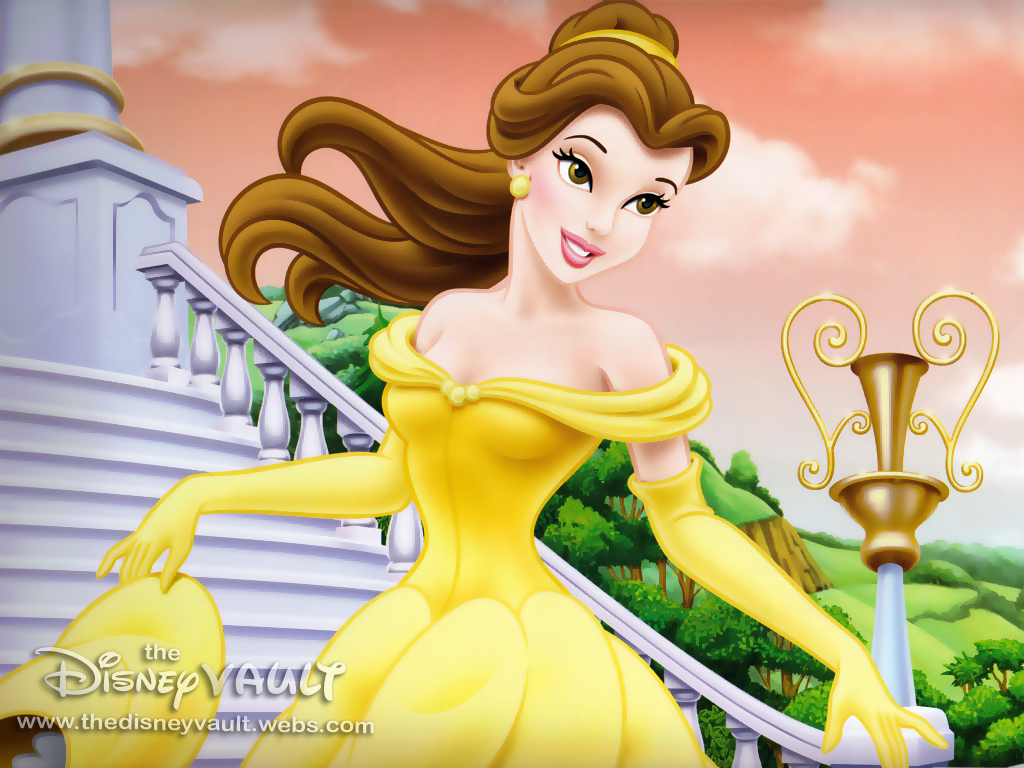
Today I've done this picture of the gorgeous Disney Princess, Belle.

This is the one I made (Awesome, right?)


And this is the original one (obviously)

Working with the tablet, I've first used Illustrator to trace the picture & then exported it to Photoshop (as you will see below) to fill it in with colours & work on it more.

Here's the process:

I've first imported the picture on Illustrator

Then I've traced it

This is how it looks sketched

Once it was ready I've exported it to Photoshop

Later on I've started filling & refining it in as you will see

First the skin, hair & face

Later on the clothes & accessories

Redefining the clothes

Redefining the face

Removed the black outline & redefined it

Adding the final touches

Same as the previous one


Ta-da!

I lost count on how long it took me to finish it, I know it did take me two hours (minimum).